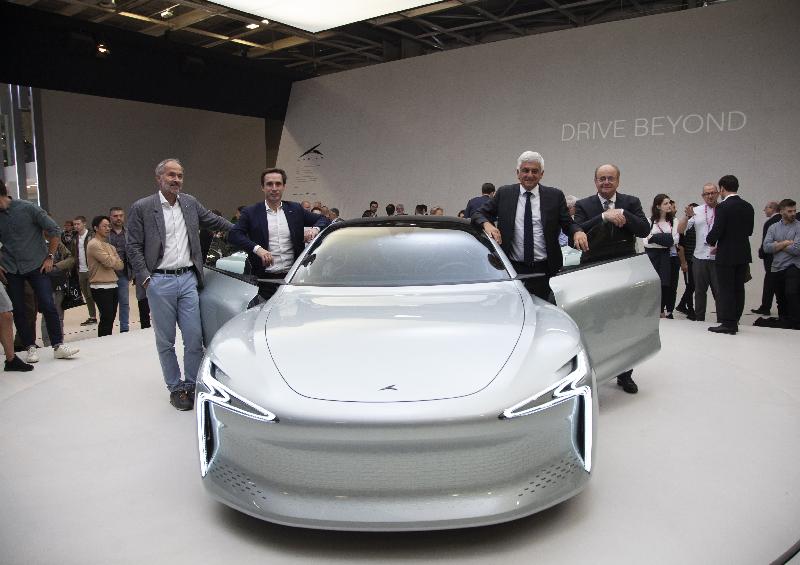
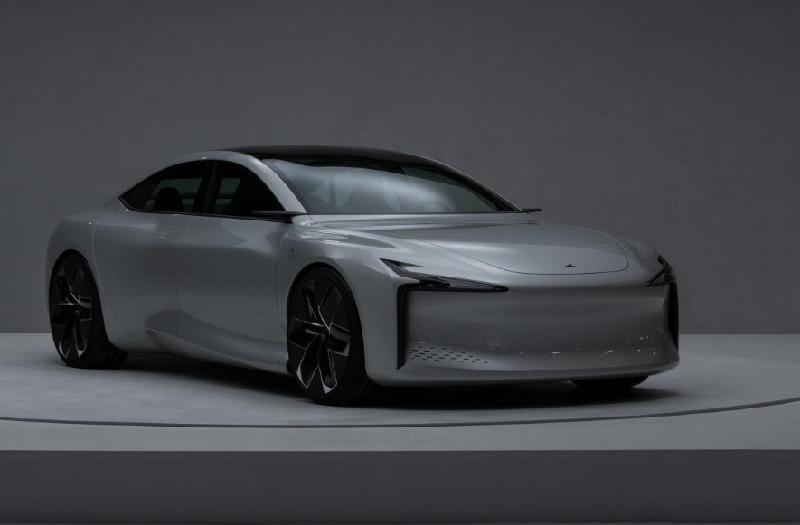
Hopium, French manufacturer of high-end hydrogen-powered vehicles, unveils the Hopium Machina Vision, the world’s first-ever hydrogen-powered sedan. A showcase of performance, innovation and technology, intended to reshape the standards of mobility.
At the Paris Automotive Week 2022, Hopium announced the reopening of the Hopium Machina Vision order book. First deliveries are scheduled for the end of 2025.
Conceived by automotive designer Felix Godard, the Hopium Machina Vision displays a notchback silhouette, that is both athletic and elegant, with a clever balance of proportions. The ascending fuselage and the kinetic grille are both optimized for fuel cell system cooling and vehicle aerodynamics. At the front, the light signature is reminiscent of the stratification of the fuel cell stack, and waves on the surface of the water.
@Hopium Machina Vision, the world’s first-ever hydrogen-powered sedan
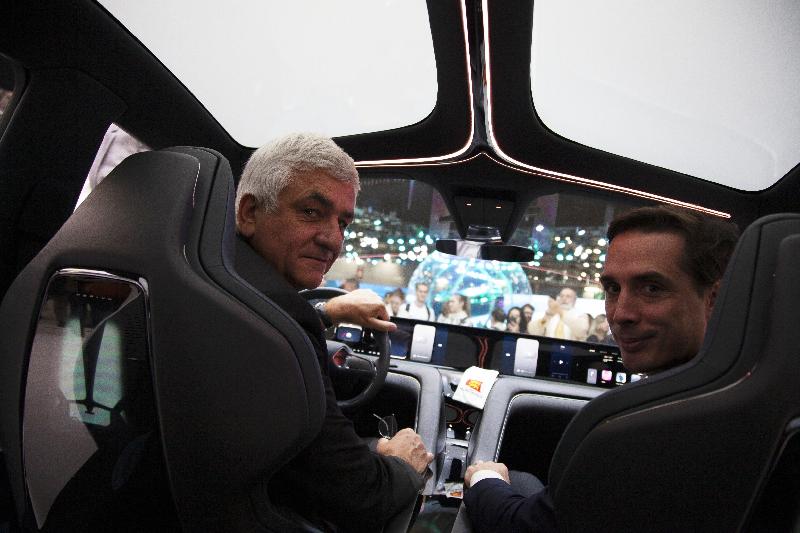
Inside, Hopium users can enjoy the uncompromising comfort of a spacious cabin and an unparalleled sky view. With a simple hand gesture running through the central spine, passengers can either opacify or turn the glass expanse into a panoramic window with the active shading function. The vehicle offers the user a new sensory connection with the interface through the haptic console, which allows navigation through main menus and control of settings, in a unique digital choreography.
At the front, the pillar-to-pillar display provides a digital landscape of information. It can transform into a full or minimized layout as desired, in a wave-like motion.
Hopium is the first French manufacturer of high-end hydrogen-powered cars and a key player in the field of zero emission mobility. Established in 2019, Hopium was founded by racing driver Olivier Lombard, winner of the 2011 edition of the 24 Hours of Le Mans competition and the most experienced hydrogen racer in the world. The race acted as an open-air laboratory which made it possible for Olivier Lombard and his team to reflect on new mobility solutions to meet contemporary environmental challenges. Bringing together leading partners and experts in the sectors of fuel cells, automotive engineering and advanced technologies, Hopium aims to restore the dialogue between mankind, nature and technology, in a search for a perfect balance.
Hopium Machina Vision, the world’s first-ever hydrogen-powered sedan, world premiere at @mondialdelauto .
Limited edition watches are a must for iconic luxury cars. The iconic Porsche Carrera RS is now paired with TAG Heuer chronographs. TAG Heuer celebrates 50th anniversary of Porsche 911 Carrera RS 2.7 This distinctive pair of limited-edition TAG Heuer chronographs pays homage to the iconic red and blue versions of the legendary Porsche 911 … Read more
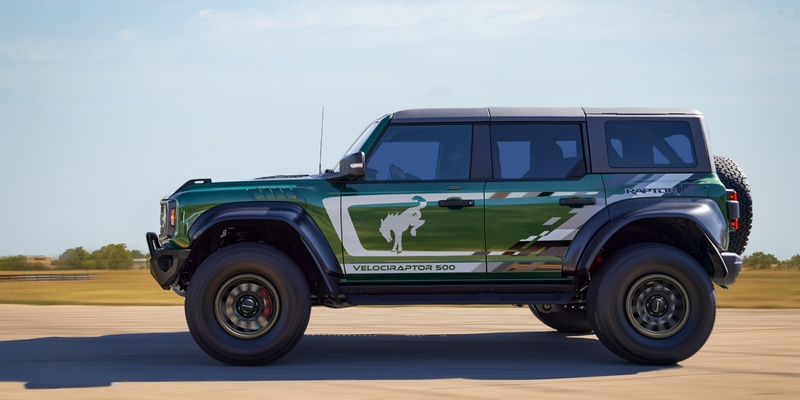
Hennessey, the Texas-based hypercar manufacturer and high-performance vehicle creator, has announced the arrival of its all-new VelociRaptor 500 Bronco – the eighth VelociRaptor model to come from Hennessey’s development team. Engineered to be more potent and capable than Ford’s factory Bronco Raptor, Hennessey’s engineers applied their expertise to the 4×4’s twin-turbocharged 3.0-liter V6 engine. A … Read more
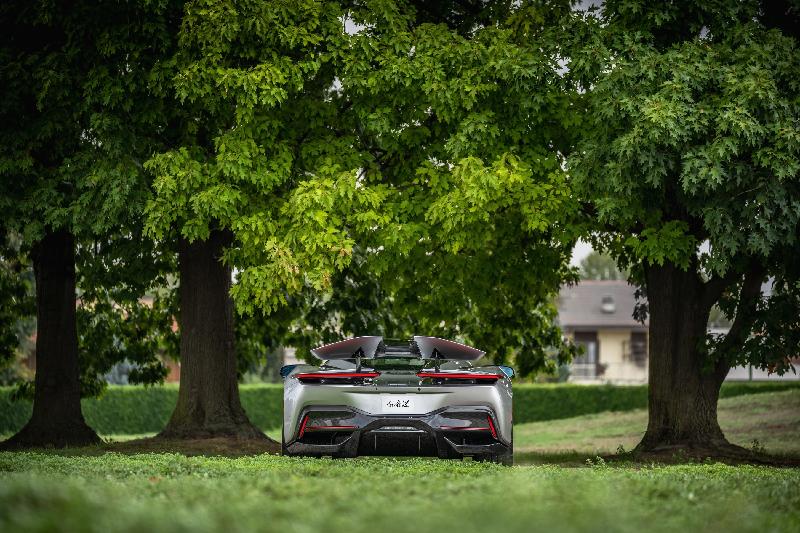
The first Battista pure-electric hyper GT cars crafted for clients in North America are delivered to new owners in October, marking another significant milestone for Italian luxury car brand Automobili Pininfarina. The first bespoke Battista is followed by the exclusive Battista Anniversario, which will also leave the Battista Atelier in Cambiano, Italy this month to … Read more
Wisk Unveils World’s First Self-Flying, Four-Seat, All-Electric, Vertical Takeoff and Landing Air Taxi.
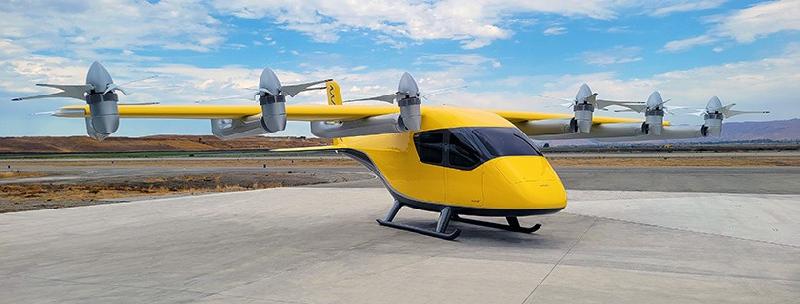
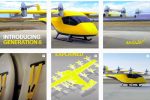
Wisk’s 6th Generation air taxi @Wisk Aero
Wisk’s 6th Generation air taxi – the most advanced in the world – is designed to meet and exceed rigorous commercial safety standards, making it one of the safest systems in aviation.
Autonomous flight with human oversight, industry-leading accessibility design, and an environmentally-conscious approach makes Wisk’s 6th Generation air taxi accessible, affordable, and sustainable.
Wisk Aero, a leading Advanced Air Mobility (AAM) company and pioneer in autonomous, electric flight, revealed the world’s first self-flying, all-electric, four-passenger vertical takeoff and landing (eVTOL) air taxi. As Wisk’s go-to-market aircraft, Generation 6 represents the first-ever candidate for type certification by the FAA of an autonomous eVTOL.
“Our 6th Generation aircraft is the culmination of years of hard work from our industry-leading team, learnings from our previous generations of aircraft, commitment from our investors, and the evolution and advancement of technology.”
“In 2010, we set out to find a way to skip traffic and get to our destination faster,” said Gary Gysin, CEO of Wisk. “That inspiration evolved into a mission to deliver safe, everyday flight for everyone. Over the past 12 years, we’ve pursued that mission through the development of five different generations of full-scale aircraft. Our 6th Generation aircraft is the culmination of years of hard work from our industry-leading team, learnings from our previous generations of aircraft, commitment from our investors, and the evolution and advancement of technology.”
Wisk is backed by two aviation leaders, The Boeing Company and Kitty Hawk Corporation. Additionally, through its strategic partnership with Boeing, Wisk has a competitive advantage leveraging 100+ years of Boeing expertise in aircraft development, scale manufacturing, and certification. In addition, Boeing’s eVTOL and autonomy engineering resources help further advance Wisk’s development.
In 2014, Wisk was one of the first companies in the world to complete a full transition (vertical takeoff to wingborne flight) and, in 2017, was the first company in the U.S. to fly an autonomous, all-electric, vertical takeoff and landing air taxi designed for passenger use.
With this aircraft, Wisk has all the chances to redefine long-standing concepts of flight and usher in a safer, scalable, and more accessible era in aviation.
Wisk’s newest aircraft will set the standard for the air taxi market and the future of travel by leveraging:
A Safety-First Approach
Through a multifaceted approach – including autonomous flight with human oversight, a simplified design with fewer moving parts, fully redundant systems, and no single point of failure – Wisk’s aircraft is being designed to exceed today’s rigorous aviation safety standards of a one-in-a-billion chance of an accident.
Autonomous Flight with Human Oversight
Wisk is one of the only AAM companies to pursue a self-flying first approach. This approach is core to the company’s overall strategy and is most importantly a critical element in bringing one of the safest systems to market in aviation. It is also the key to unlocking the scale and the full potential for the broader AAM industry.
Wisk’s multi-faceted self-flying first approach includes:
Leveraging the same proven technology that accounts for more than 93% of automated pilot functions on today’s commercial flights;
New, innovative technology such as improved detect and avoid capabilities, sensors, and more;
Wisk’s logic-driven, procedural-based, decision-making software which provides reliable, deterministic outcomes;
Multi-vehicle supervisors that provide human oversight of every flight and have the ability to intervene when needed.
Wisk’s 6th Generation aircraft design and configuration includes proprietary 12 propeller design and boom configuration with improved propulsion systems. Tilting propulsion units in front of the wing and fixed lift units aft of the wing are optimized for range, improved aircraft control and performance, and efficient energy management.
The aircraft features a raised wing design, extended booms, and increased size and number of propeller blades to improve safety, stability, and the passenger experience, while reducing both in-cabin noise and the aircraft’s overall noise footprint.
A larger passenger cabin with 4 seats and ample storage for baggage and personal carry-on items is making it one of the most versatile air taxis in the market.
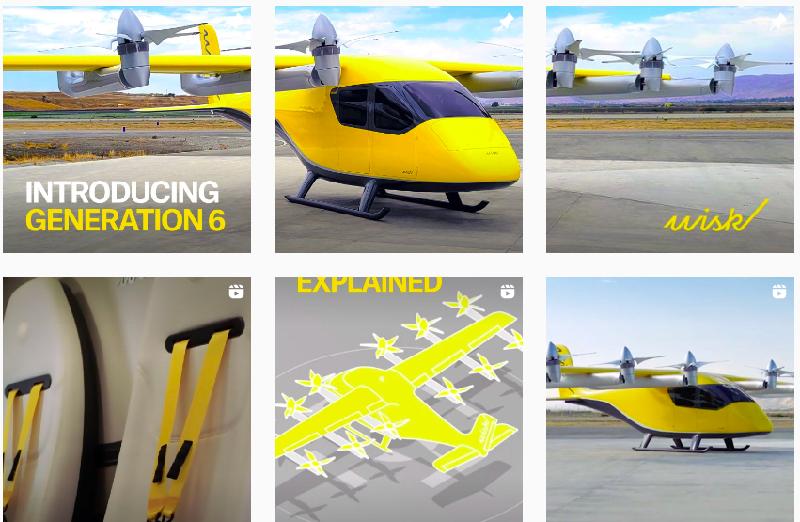
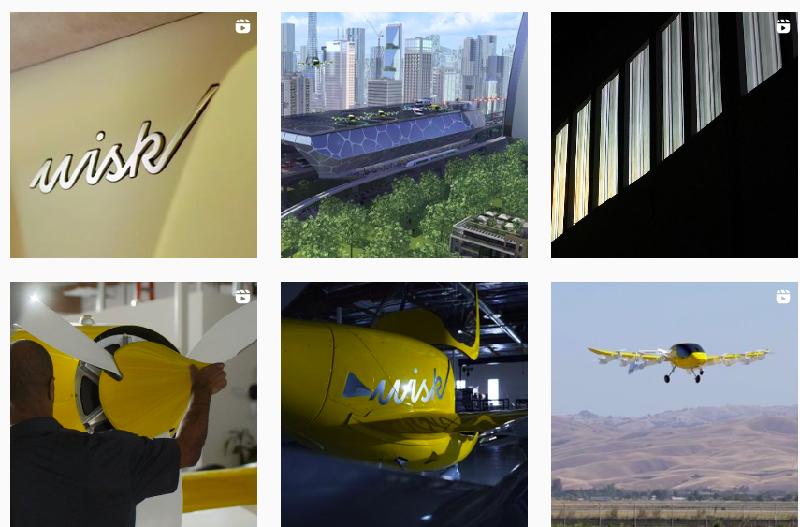
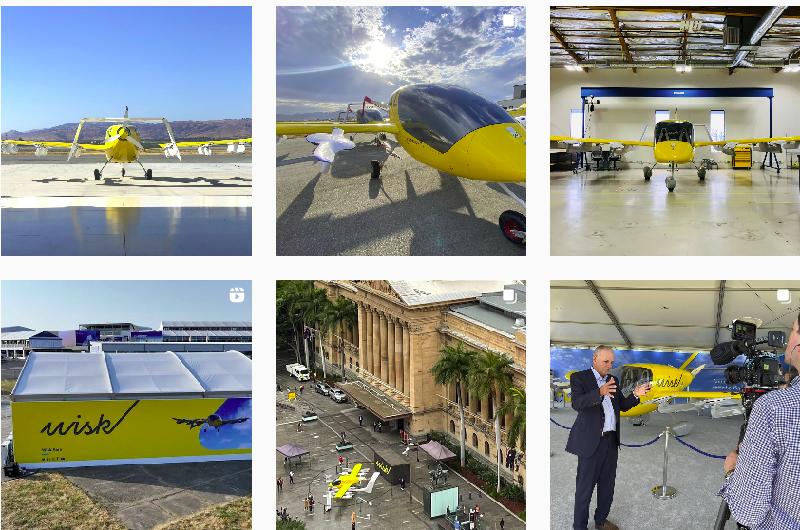
@instagram.com/wisk.aero/
Wisk’s 6th Generation aircraft is designed to be a service for everyone, with a price target of $3 per passenger, per mile.
In addition to affordability, Wisk has made accessibility a cornerstone of its design process. Generation 6 incorporates a number of accessibility features, from an entry and exit designed for individuals across the mobility spectrum, to user interfaces that seamlessly accommodate people living with hearing, vision, and other impairments. Wisk is one of the few industry players that have prioritized catering to such a wide demographic of passengers.
Specifications and Performance
Wisk’s 6th Generation aircraft leverages key learnings and insights from its previous five generations of eVTOL aircraft to deliver a new level of performance.
Cruising speed: 120 knots; Range: 90 miles with reserves (~144 kilometers with reserves); Altitude: 2,500 – 4,000 ft above ground; Seats: 4; Dimensions: <50 foot wingspan; Power: electric; Operation: Autonomous with human oversight.
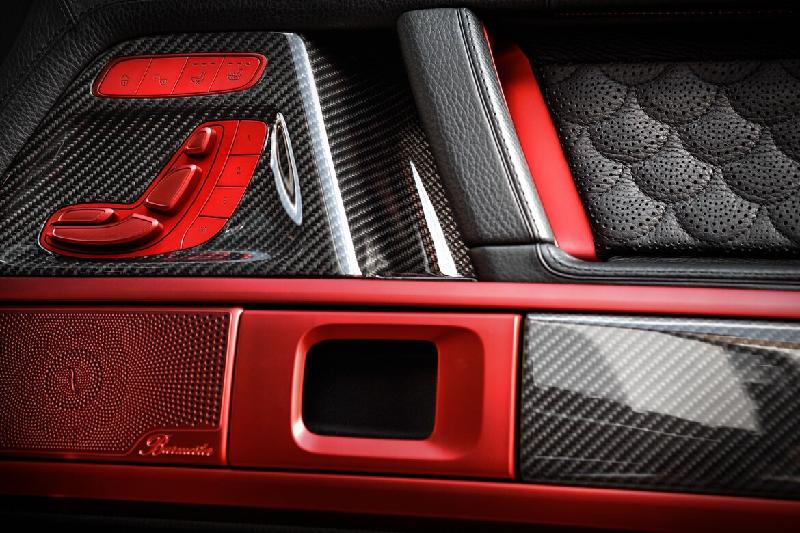
Welcome to the biggest and boldest chapter of the BRABUS Rocket legacy – The BRABUS P 900 Rocket Edition “One of Ten”. This next-level performance pick-up is as unmistakably BRABUS as ever, with a brand new, never before seen identity. World Premiere at The Monaco Yachts Show Brabus P900 Rocket Edition One of Ten The … Read more